Insights for retailers running Lightspeed or Heartland Retail alongside Shopify.
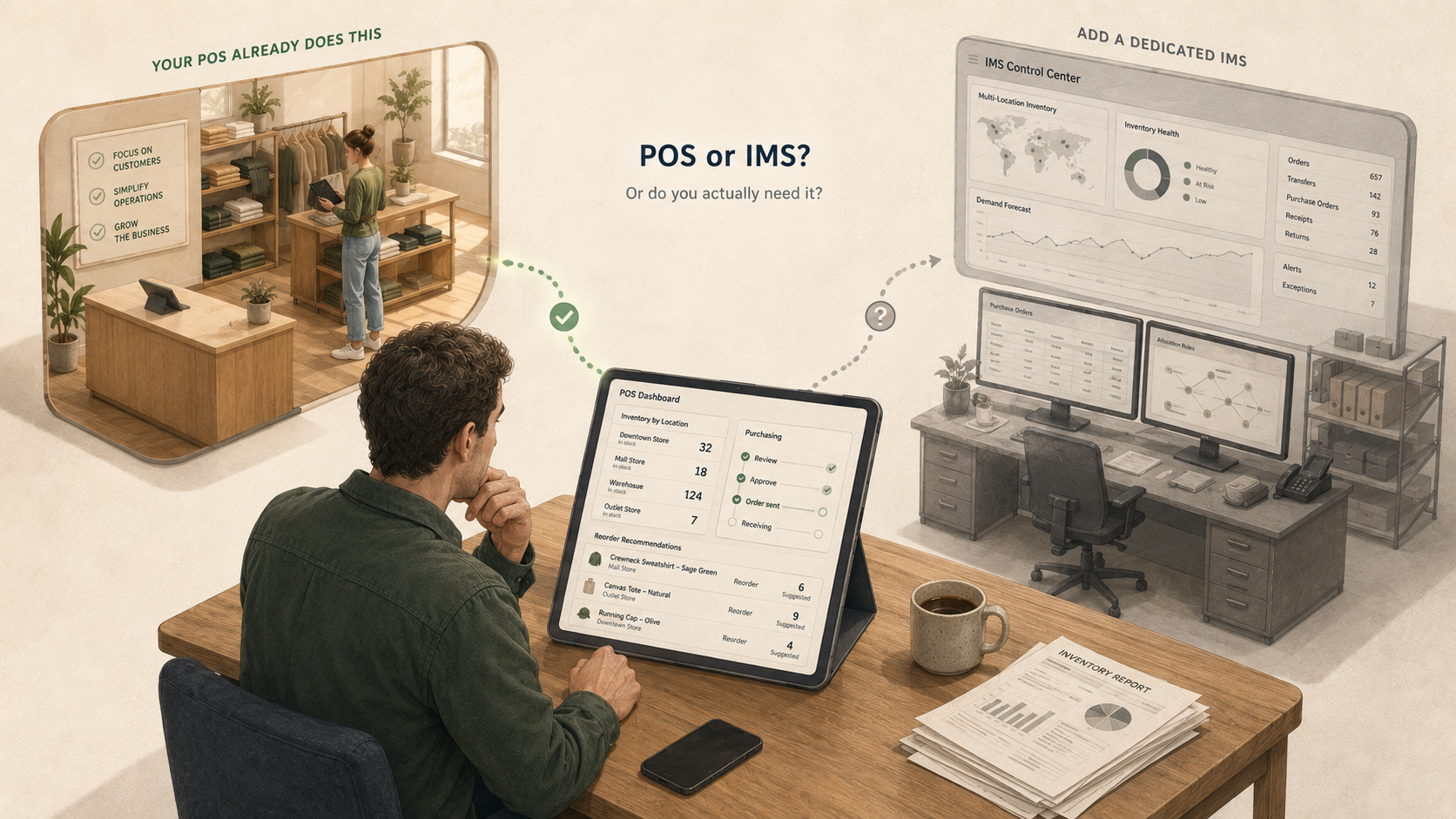
Most multi-location Shopify retailers can run their inventory management out of the POS they already use. Here's how to tell whether you genuinely need a separate IMS or just need a better way to connect what you have.
Lightspeed Retail comes in two flavors — R-Series and X-Series. They serve different kinds of retailers. Here's how to tell which one fits your business, and what stays the same regardless of which you pick.
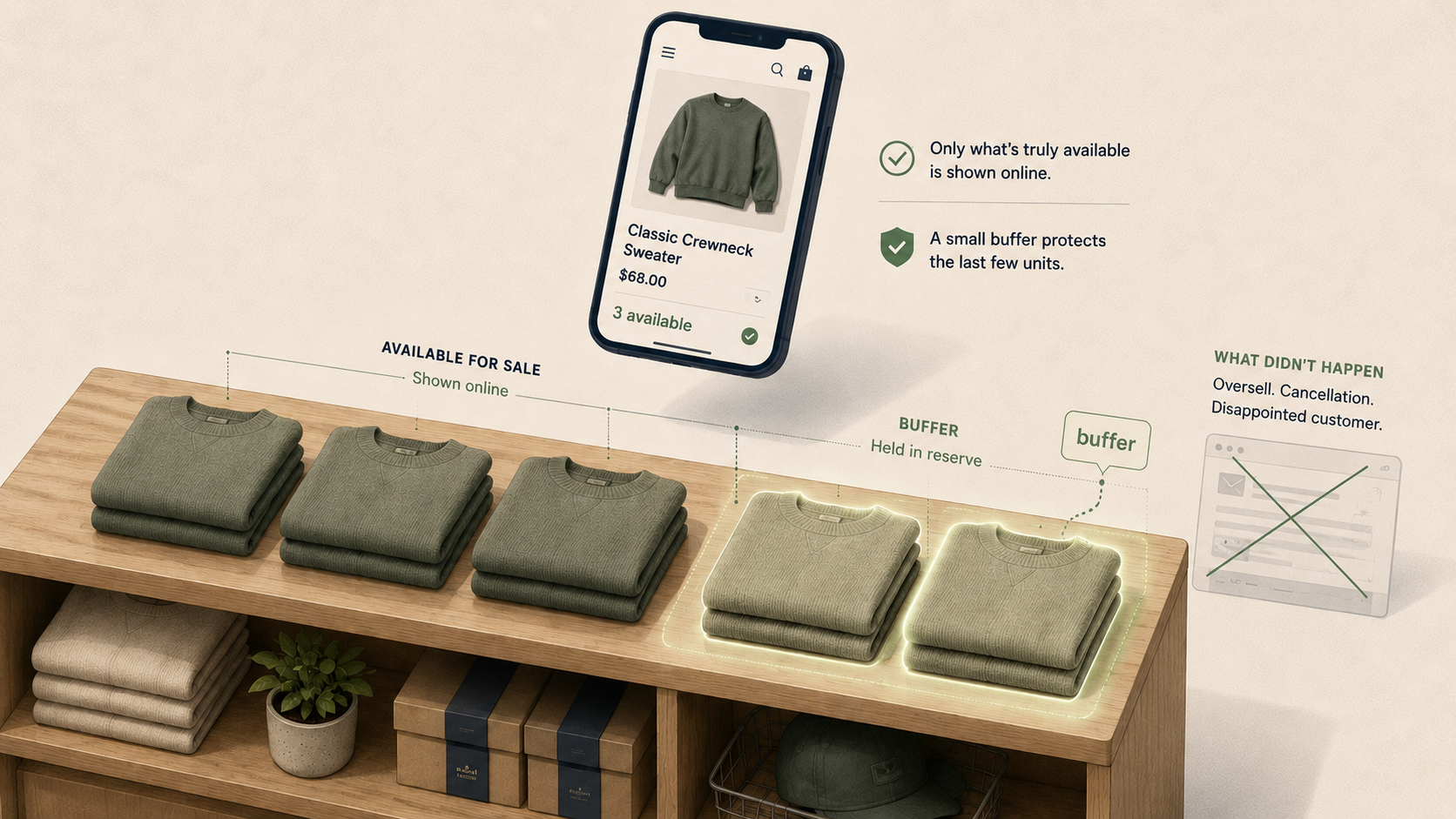
Most overselling traces back to small inventory drift — units that sold, were damaged, or went missing without the system catching up. Here's how inventory buffers prevent the cancellations, refunds, and apology emails that follow.
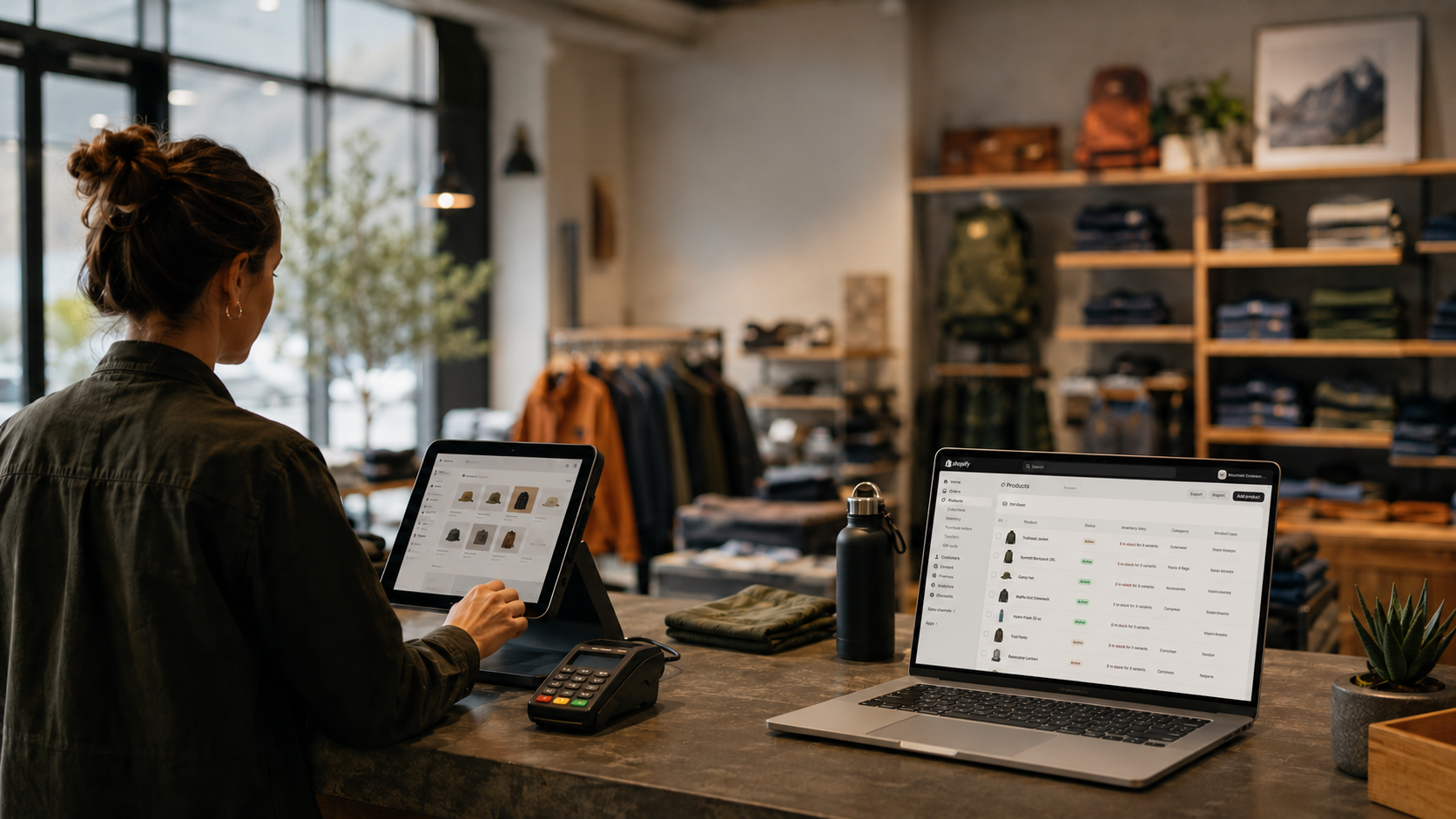
Lightspeed and Shopify POS have different operational strengths. Here's how to tell which one fits your business — and why most retailers thinking about switching don't actually need to.
Batch inventory sync is fine for some retailers and a quiet source of overselling for others. Here's what 'real-time' actually means, when batch is enough, and how to tell which one your operation needs.
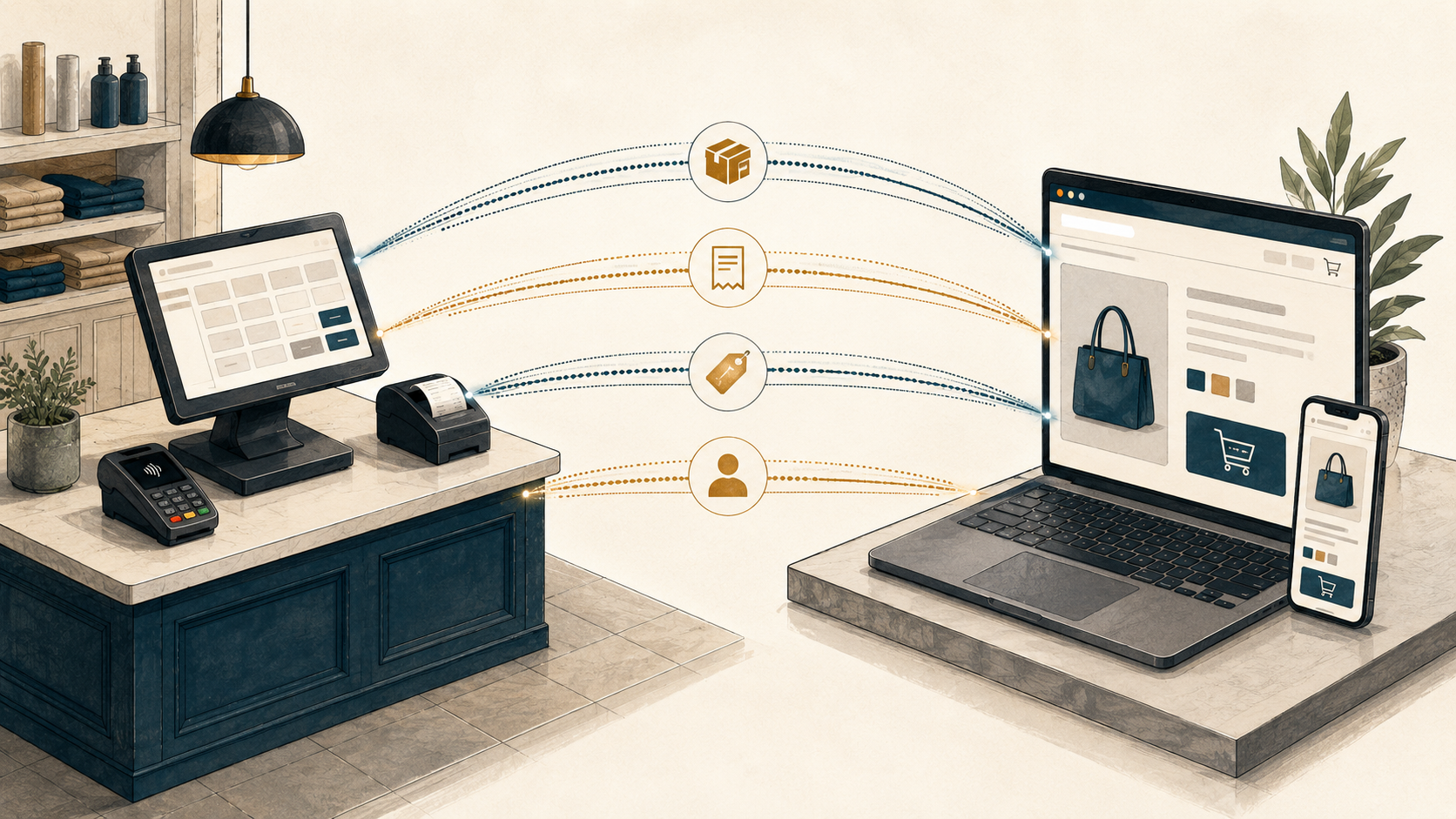
POS-ecommerce integration keeps in-store and online inventory, orders, and customers aligned. Here's how it works, where it breaks, and what good integration looks like for retailers.
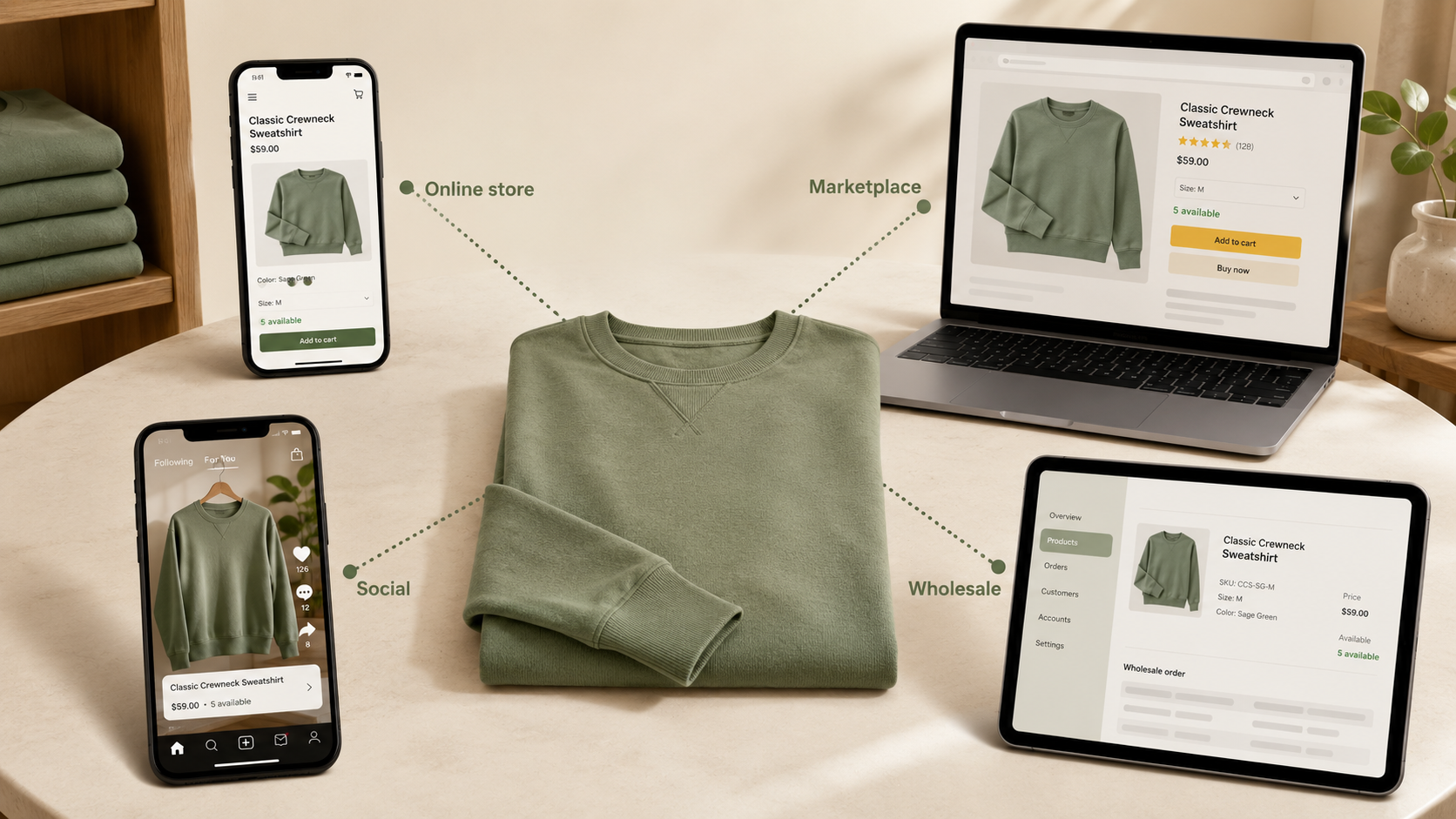
Selling on Shopify, in-store, and marketplaces means keeping inventory aligned across every channel. Here's how multi-channel inventory sync actually works, where it breaks, and what to look for.
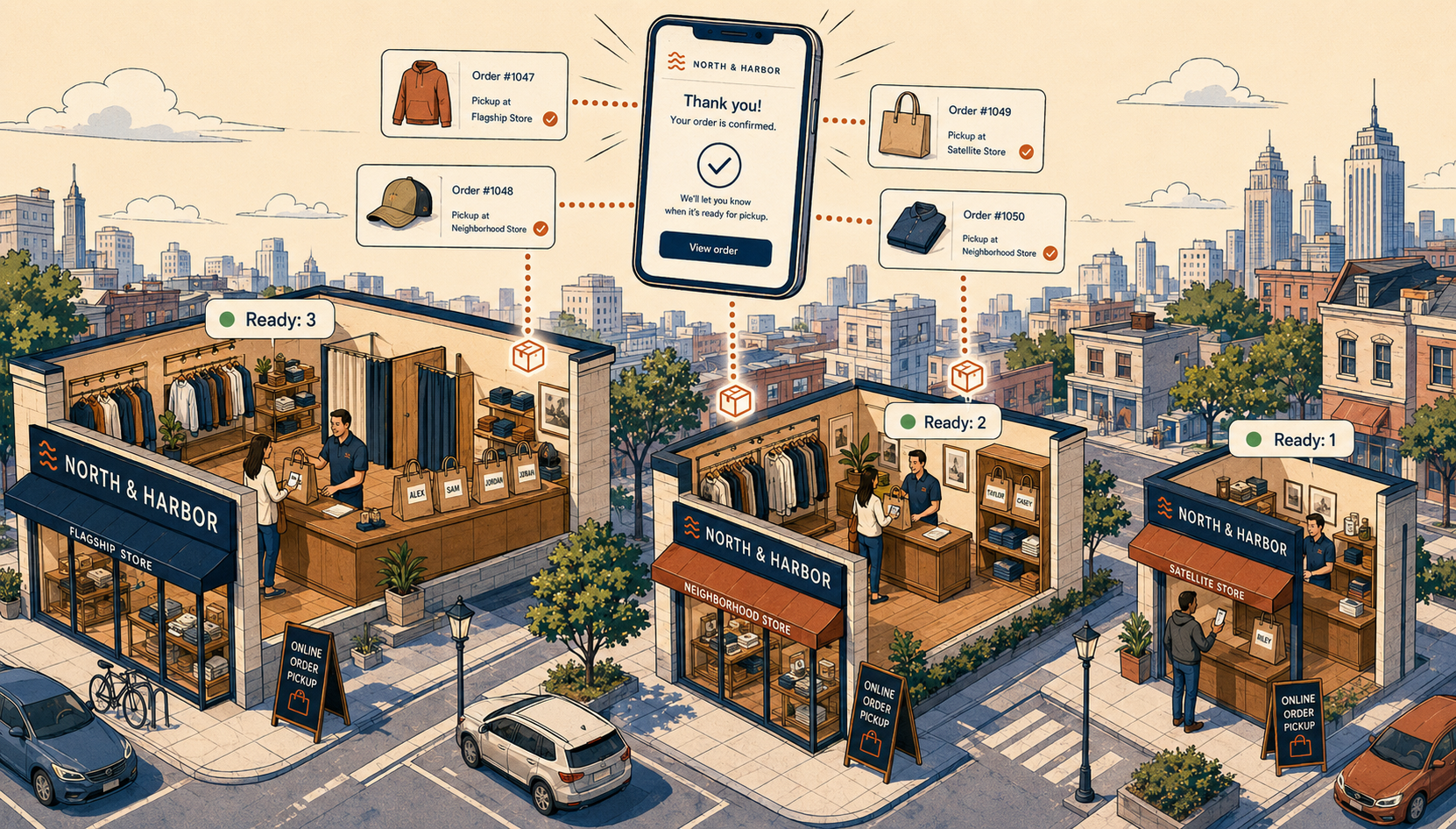
At one store, BOPIS is simple. At five, the real problems are training consistency and inventory drift — not routing. What changes at scale, and how to handle it.
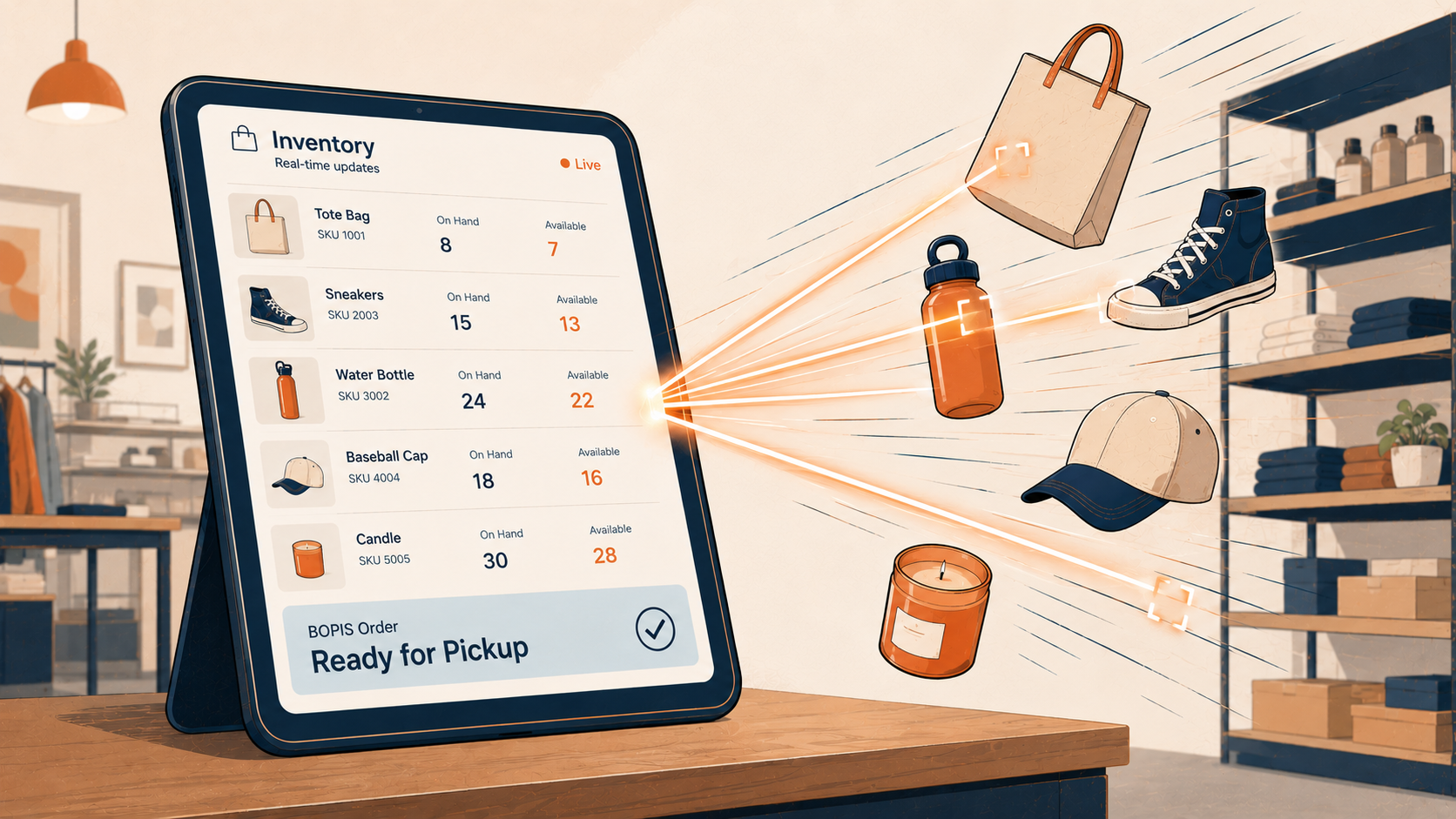
Most BOPIS programs don't fail because of UX or training — they fail because they oversell. Here's how real-time inventory sync prevents it, and what batch sync gets wrong.
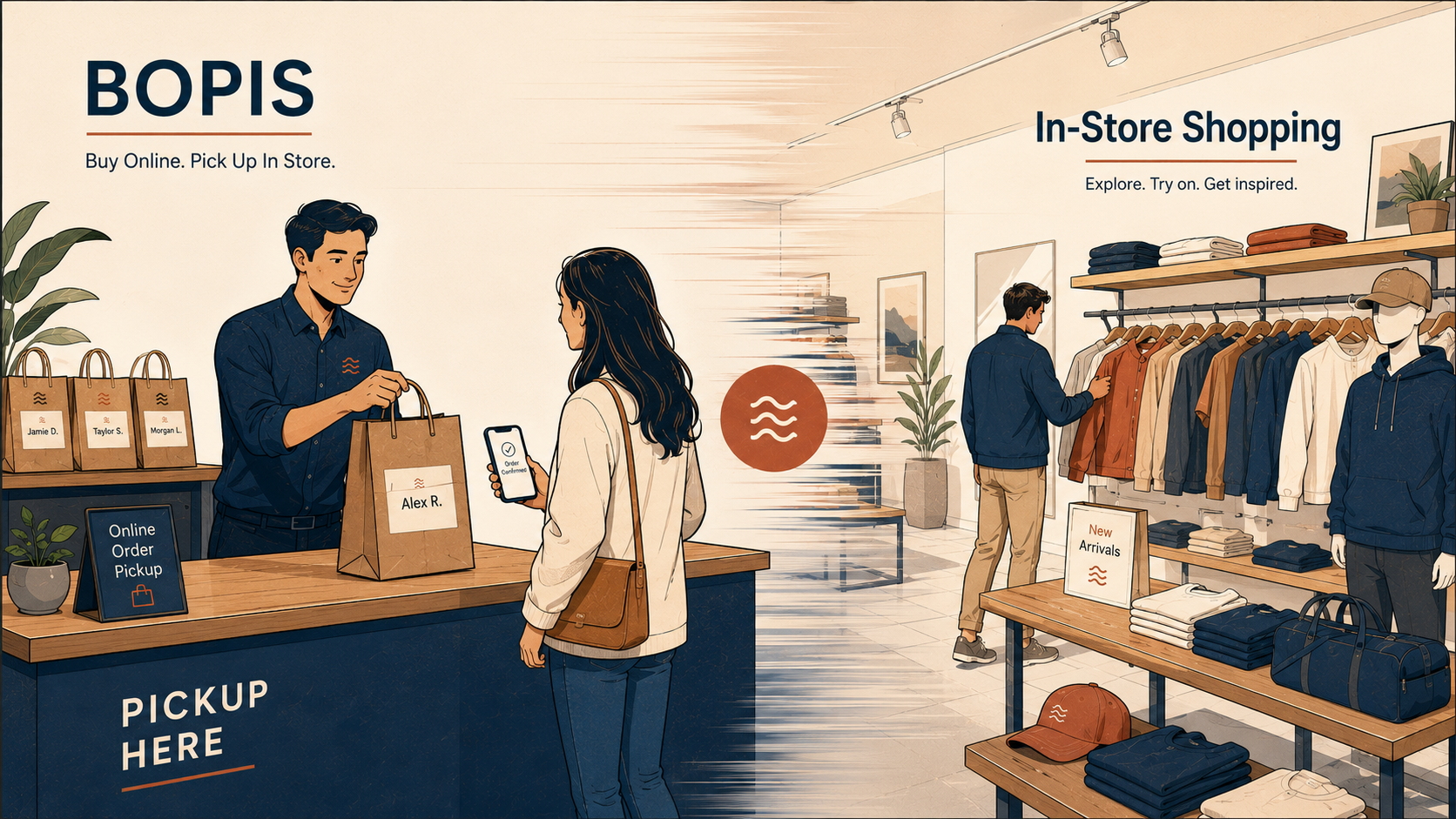
Brick and mortar retailers often treat BOPIS as unnecessary assuming customers will just walk into the store no matter what. But they won't: many local shoppers choose pickup even when they could walk in. Here's why — and what most retailers get wrong about it.
A practical walkthrough of what it takes to launch BOPIS on Shopify — the workflow, the tech stack, the operational decisions, and the failure modes to plan for.
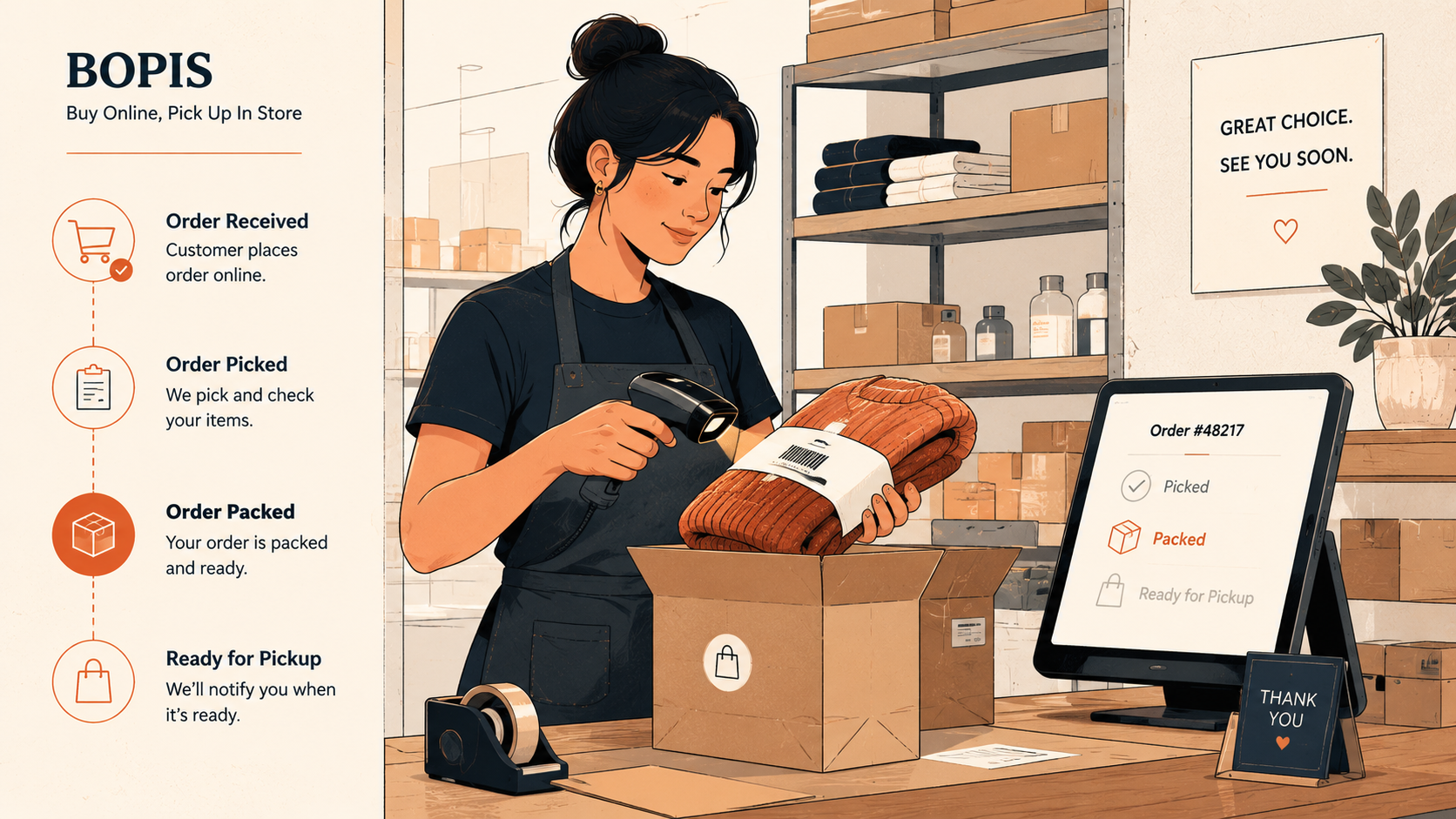
BOPIS stands for buy online, pick up in store. Here's what it means, how the model works, why customers want it, and what retailers need to deliver it well.